
Every stylist remembers the one who didn't turn up. A three-hour colour booked on a Saturday morning, the bowl mixed, the chair empty, and a waitlist of people you could have fitted in. One no-show is annoying. Several a month is money coming out of your pocket.
A deposit fixes most of it. Handled badly, though, it makes a salon feel stingy and puts clients off booking at all. This guide covers the middle ground: how much to take, for which services, and how to word it so it reads as professional rather than punitive.
Why deposits work
A deposit changes how a booking feels. A free booking is a maybe. A booking with $40 behind it is a plan. Clients who have paid something are far more likely to turn up, arrive on time, and let you know early if things change, which gives you a real chance to refill the slot.
Do the maths for your own chair. Suppose one $180 colour goes missing each week. That's $9,360 a year in lost takings from one chair, before counting product you mixed and the client you turned away for that slot. Even halving it pays for a lot.
A deposit also filters people. Someone who books three salons for the same Saturday and picks one on the day will usually skip salons that ask for a deposit. You don't need those bookings.
How much deposit to charge
The right amount depends on what an empty chair costs you for that service. The longer the service and the more product or preparation involved, the more you stand to lose. These are sensible starting points for a New Zealand salon:
| Service | Starting point | Why |
|---|---|---|
| Quick services (trims, fringe, blow-wave, kids' cuts) | None, or only for clients who have missed before | The slot is easy to refill, and a deposit on a $40 service feels out of proportion. |
| Cuts and restyles | Optional, around $20 | A missed restyle hurts more on busy days. Many salons ask only at peak times or for new clients. |
| Colour, foils, balayage, toning | 20-30%, or a fixed $30-$50 | Long bookings that are hard to refill at short notice. |
| Colour correction and big transformations | 50% | Half a day in the chair and a lot of product. Usually booked after a consultation anyway. |
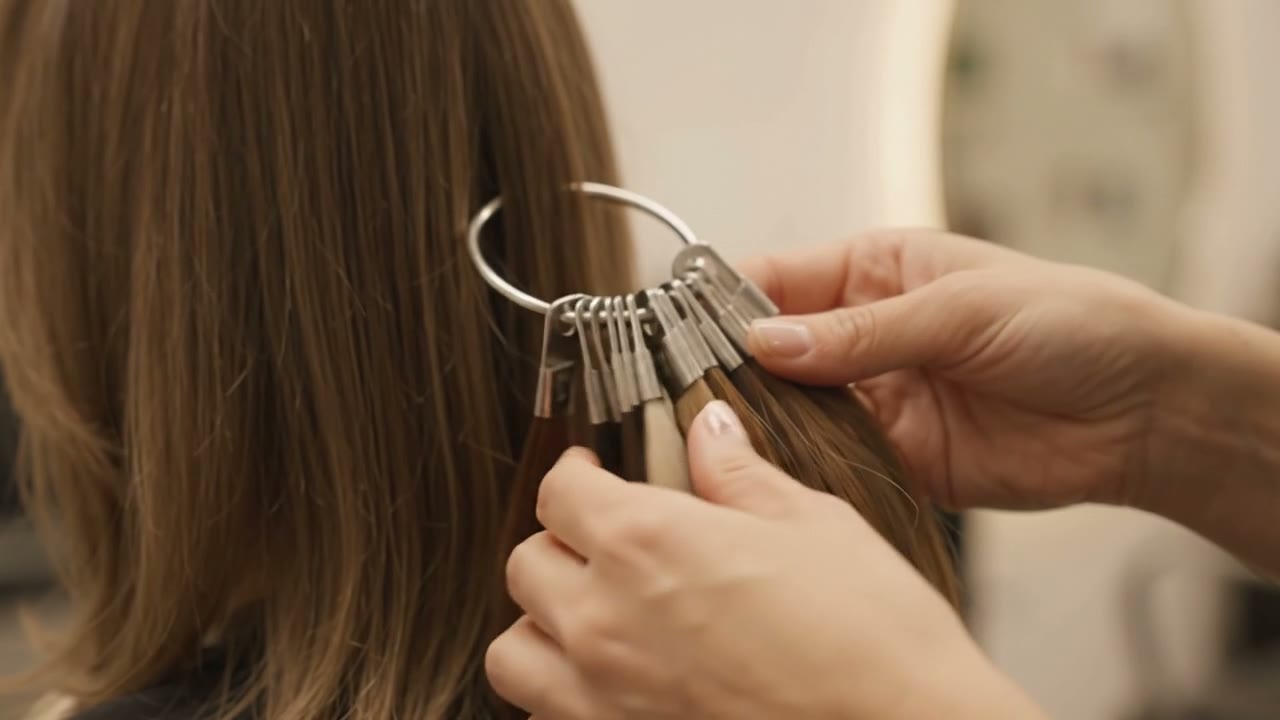
| Extensions | The cost of the hair, plus a booking deposit | You are buying stock for a specific client. It shouldn't come out of your pocket. |
| Bridal, events and groups | 50% to secure the date, balance before the day | The date is gone for anyone else, often months ahead. Put this in a separate written agreement. |
Two refinements work well in practice:
- New clients versus regulars. Asking new clients for a deposit while trusted regulars book freely is common and easy to explain. You know your regulars. You don't yet know the person who found you on Google last night.
- Peak times. Some salons only take deposits for Friday evenings and Saturdays, when every slot can be filled.
Percentage or fixed amount?
A percentage scales on its own. A $300 colour correction takes more than a $140 root tint without you having to set anything per service. The downside is odd numbers: 25% of $165 is $41.25.
A fixed amount is easier to explain ("a $40 deposit secures your colour appointment") and easier for clients to remember. The downside is that it can be too little on big jobs and too much on small ones.
If most of your menu is colour work, a percentage between 20% and 30% is the simplest rule to live with. If your menu is mostly cuts with a few long services, a modest fixed amount plus a bigger deposit for long services works better.
Making your deposit policy fair (and defensible) in New Zealand
In New Zealand, a client who cancels a booking at the last minute is breaking the agreement they made with you. If that costs you money, you're generally entitled to recover some of it. Consumer Protection (MBIE) makes the same point in its guidance on cancelling bookings, and tells consumers to check the provider's terms. That gives you five rules to follow:
- Show it before they pay. The policy needs to be on the booking page, next to the pay button, not buried in a terms page nobody opens. A term the client never saw is hard to rely on.
- Keep it proportionate. The deposit should be about what you actually lose, not a penalty. Keeping $50 on a missed half-day colour is easy to justify. Keeping $50 on a missed fringe trim is not.
- Say exactly what happens. How much notice counts as fair warning (24 or 48 hours is usual), whether the deposit is kept or moved to a new time, and what happens if they're late.
- Say it comes off the bill. A deposit is part-payment, not an extra fee. Clients who feel charged twice leave angry reviews.
- Treat both sides the same. If you cancel, they get the full deposit back or moved, with no argument.
This is practical guidance, not legal advice. If a policy involves large sums, such as bridal parties or extension stock, it's worth a quick check with a lawyer or your industry association.

Free salon deposit policy template
Copy this, change the amounts to match your menu, and put it on your booking page, your confirmation email, and at the front desk. It's deliberately short. The shorter it is, the more likely clients are to read it.
Booking deposits
To secure colour, extension and long appointments, we take a deposit when you book: [25% of the service / $40]. It comes straight off your bill on the day. It's not an extra charge.
Changing your appointment
Life happens. If you let us know at least [48] hours before, we'll happily move your appointment and your deposit comes with you.
Late notice and missed appointments
With less than [48] hours' notice, or if you don't arrive, the deposit covers the time we held for you and isn't refunded. If you're running more than [15] minutes late, we may need to shorten your service or rebook you so the next client isn't kept waiting.
If we need to cancel
If we ever have to cancel, your deposit is refunded in full or moved to a new time, whichever you prefer.
Change the bracketed parts, and keep the tone. Phrases like "life happens" and "the time we held for you" tell clients you're protecting the appointment, not trying to catch them out.
How to introduce deposits without upsetting regulars
The main worry about deposits is the conversation with existing clients. It's usually much easier than people expect, especially if you:
- Start with new clients and long services. Regulars who book a cut every six weeks may never notice a change.
- Give notice. A short post and a message to regulars two weeks ahead feels respectful. Changing things overnight doesn't.
- Explain it as protecting their time. "Deposits mean fewer empty chairs, which means more appointments for our regulars."
- Give your team one sentence to say. When someone asks at the desk: "It just secures your time with us, and it comes straight off your bill on the day."
Here's a message you can adapt for Instagram or a text to regulars:
A little update from us. From [date], colour and longer appointments booked online will include a small deposit that comes straight off your bill on the day. It helps us keep the chair free for you and cuts down on last-minute gaps, so more of you can get in when you need to. Need to move your booking? Give us [48] hours' notice and your deposit comes with you. Thank you for being the best clients a salon could ask for.

Common mistakes to avoid
- Hiding the policy. If the client first hears about it when you keep their money, you have a complaint and a bad review coming.
- A deposit bigger than the loss. A $60 deposit on a $65 service is prepayment dressed up as a deposit. If that's what you want, just ask for payment upfront and say so.
- Enforcing it for some people and not others. Discretion is fine, like a genuine emergency or a first-time slip from a ten-year regular. Waiving it for friends and charging strangers soon causes trouble.
- Taking deposits by bank transfer. Chasing screenshots, checking the bank account and matching payments to names is admin you don't need. Taking it by card when the client books removes the chasing completely.
- Forgetting to deduct it. Make sure the balance on the day is already reduced. Every deposit a client has to remind you about costs trust.
Frequently asked questions
Can a salon in New Zealand keep a deposit if a client cancels?
Generally yes, if the client agreed to the terms when they booked and the amount is reasonable compared with what the late cancellation actually costs you. Show the policy before payment, keep it proportionate, and get advice if you're unsure.
Should deposits be refundable?
Refundable, or transferable to a new time, when the client gives fair notice. Kept when they don't. That combination is the easiest to defend and the easiest for clients to accept.
How much deposit should I take for extensions?
At least the cost of the hair you're ordering for that client, since you can't easily use it for anyone else. Many salons also add a booking deposit for the appointment time itself.
Should I charge deposits to regular clients?
That's your call. Many salons exempt trusted regulars and ask everyone new. If a regular starts missing appointments, a deposit on their next booking is a polite, low-drama fix.
What if the client is sick?
Most salons move the deposit to a new appointment if the client lets them know as soon as they can. Choosing kindness here costs little and earns loyalty. Just be consistent.
How Lustre handles deposits
Every Lustre salon website has online booking built in. You choose whether clients pay in full, leave a percentage deposit, or leave a fixed deposit when they book. They see exactly what they pay now and what's left for the day, and the money goes straight to your own Stripe account. Clients can reschedule themselves online within the notice window you set, which keeps the admin off your phone.
One price for the whole salon: $39.95 a month incl GST. A 0.5% Lustre Payments fee applies only to money processed through Lustre, with Stripe's card rate on top. Nothing is charged on EFTPOS, cash or bank transfer.
Get my salon siteCheck my current website free